Was Cecil the lion’s death business as usual?
Ronald Orenstein
Contributed to The Globe and Mail
Published Monday, Aug. 03, 2015 6:00AM EDT
Last updated Monday, Aug. 03, 2015 6:00AM EDT
Ronald Orenstein is a Canadian zoologist, author, lawyer and wildlife conservationist. He is the author of Ivory, Horn and Blood: Behind the Elephant and Rhinoceros Poaching Crisis.
The death of Cecil the lion has shocked and angered people around the world. It should. But perhaps the most shocking thing about his killing at the hands of a selfish American hunter and his guides is that there may have been nothing unusual about it. Zimbabwe’s government may have created the situation that led to Cecil’s death.
Hwange National Park is ringed with private landholdings where hunting is legal, though the land where Cecil was killed did not have an assigned quota for lions. Luring Cecil out of Hwange has been called “unethical” by the Safari Operators Association of Zimbabwe, and the Zimbabwe Parks and Wildlife Act makes it illegal to “entice” an animal out of a national park without a permit. However, a 2007 study found that 24 lions radio-collared in Hwange were shot by sport hunters between 1999 and 2004. Further killings have been alleged since. The difference this time is that Cecil was famous.
Zimbabwe has been treating its wildlife as a commodity for years. Though the kills have decreased recently, its hunting quotas for lions, among the highest in Africa, have been called unsustainable by lion biologists. Lions as young as two years old have been shot for trophies, despite recommendations that only animals at least five years old should be hunted to give young males a chance to reproduce.
In early July, despite protests from around the world (and arguably violating its own laws against animal cruelty), Zimbabwe exported 24 baby elephants from Hwange to a dubious safari park in China, claiming that the move relieved elephant overpopulation. Zimbabwe’s Environment Minister at the time, Saviour Kasukuwere, said that “it made commercial sense” to send the country’s wildlife to China. The Zimbabwe Independent cited claims that the money went to pay a shoe manufacturer for boots for the military.
Hunters argue that the fees they pay for the right to shoot a lion can benefit conservation and alleviate rural poverty. Conservation is certainly expensive, and money helps – though tourism revenue exceeds hunting revenue in many African countries, and a 2010 study, published by the pro-hunting International Council for Game and Wildlife Conservation and the United Nations Food and Agriculture Organization, found that hunting companies in Tanzania contributed only about 3 per cent of their revenues to local communities.
When a hunter is willing to pay tens of thousands of dollars into a corrupt system, the benefits can be hard to find. Zimbabwean blogger Alex Magaisa claims that there is “a huge amount of corruption and skullduggery” in Zimbabwe’s hunting industry, and warns that there will be “more Cecils in future.” The enormous prices hunters pay tempt operators to give clients what they want, and fund the bribes needed to get it. When hunting quotas are based on the industry’s bottom line, and the rules that exist are ignored, trophy hunting becomes little more than organized, legalized poaching, and the hunters’ targets little more than contraband.
African lions have been in serious decline for years. Numbering an estimated 75,800 in 1980, a combination of human population growth, habitat loss, disease and hunting pressure has reduced their number to no more than 32,000 today (and possibly a good deal less). It is a decline that has gone largely unrecognized. A 2011 petition to list the African lion under the U.S. Endangered Species Act – a listing that would require the United States to prohibit trophy imports unless they can be shown to benefit conservation – still awaits action.
The revulsion at Cecil’s death may have been, in part, because he was an animal with a name. I hope, nonetheless, that it leads countries like the United States, the biggest importer of lion trophies, to take a closer, and tougher, look at “sustainable” wildlife management, and to clamp down on trophy imports that threaten the survival of Cecil’s nameless kin. If they do, perhaps Cecil will not have died entirely in vain.
Monday, August 3, 2015

Friday, April 3, 2015
Reference List for "Butterflies"
My new book Butterflies, with photographs by Thomas Marent, is now in the hands of the designers. It should be available from Firefly Books this fall.
In writing Butterflies I consulted over 400 original scientific papers. There was no room to list these in the book, but anyone interested can download the Reference List here. Perhaps it will whet your appetite for the book itself!
In writing Butterflies I consulted over 400 original scientific papers. There was no room to list these in the book, but anyone interested can download the Reference List here. Perhaps it will whet your appetite for the book itself!
Monday, December 15, 2014
GrrlScientist Names Hummingbirds One of the Best Bird Books of 2014
Dr. Devorah Bennu, otherwise known as Devorah the Ornithologist, has published (for the first time) a list of the best bird books of the year on her well-known and widely-read Guardian blog GrrlScientist. I'm very pleased that Hummingbirds is one of the eleven books on her list. If you read her post, you will see that I am in very good company!
Tuesday, September 23, 2014
Humminngbirds released - Butterflies on the way!
Hummingbirds is now available on Amazon, and should be in bookstores soon. In fact readers in North America have a good chance of seeing a copy before I do - I'm writing this from Kuching, Malaysia, where Eileen and I are dealing with a family health crisis.
A highlight of Hummingbirds - and it takes something for a mere author to admit this! - is the portfolio of magnificent photographs by the best hummingbird photographers in the business, Michael and Patricia Fogden. I'm now working on what is sure to be another beautifully-illustrated book - Butterflies, this time showcasing a gallery of photographs from around the world by Swiss photographer Thomas Marent, for release in 2015. As I did for Hummingbirds, I am combing the latest scientific literature for new discoveries, insights and - increasingly in these days of global warming and habitat destruction - warnings. I'll post the full list of references here.
Meanwhile, enjoy Hummingbirds!
A highlight of Hummingbirds - and it takes something for a mere author to admit this! - is the portfolio of magnificent photographs by the best hummingbird photographers in the business, Michael and Patricia Fogden. I'm now working on what is sure to be another beautifully-illustrated book - Butterflies, this time showcasing a gallery of photographs from around the world by Swiss photographer Thomas Marent, for release in 2015. As I did for Hummingbirds, I am combing the latest scientific literature for new discoveries, insights and - increasingly in these days of global warming and habitat destruction - warnings. I'll post the full list of references here.
Meanwhile, enjoy Hummingbirds!
Monday, June 2, 2014
Reference List for "Hummingbirds"
As promised, here is the Reference list for my new book, Hummingbirds.
Sunday, May 18, 2014
From Elephants to Hummingbirds

As I say in my introduction: "There are many books about hummingbirds, and I wanted to make this one a bit different. Rather than turn out yet another general natural history of the hummingbird family, I have made the theme of this book the things that make these extraordinary creatures unique among birds. To do that, I have focused on the most recent scientific research into their relationships, their lives and their chances for survival. Much of this information has not, to my knowledge, appeared in any book for the general reader."
If that doesn't excite you, let me add that the book is filled with a beautiful hummingbird photographs by the acknowledged masters of the art, Michael and Patricia Fogden.
Hummingbirds is already available for pre-order on Amazon and other sites. For those of a scholarly bent, I will be posting the full list of references I consulted for the book on this site (as soon as I figure out how!).
Thursday, May 15, 2014
Ivory, Horn and Blood a Silver Nautilus Award Winner!

Ivory, Horn and Blood has been named as a 2014 Nautilus Silver Winner in the Category of Journalism/Investigative Reporting. The Nautilus Book Awards, according to their website, represent "Better Books for a Better World." "Now in
its 15th year, this unique book award program continues to gain prestige
with authors and publishers around the world as it seeks, honors,
awards and promotes print books that inspire and connect our lives as
individuals, communities and global citizens."
Ivory, Horn and Blood has also received an Honorable Mention for General Non-Fiction in the 2014 Green Book Festival.
Thursday, January 30, 2014
Ivory, Horn and Blood to lauch in Malaysia
As readers of my other blog, A Wandering Naturalist, will know, I spend a good deal of time in my wife's home state of Sarawak in Malaysian Borneo. For anyone reading this who will also be in Sarawak next month, I would be very glad to see you at UCSI University in Kuching at 7:30 PM on the 21st. I will be launching Ivory, Horn and Blood, and bringing people up to date on the ivory and rhino horn poaching crisis. Malaysia has been specifically identified as a transit point for smuggled ivory, so the subject is highly relevant for a Malaysian audience. My presentation is being sponsored jointly by the Sarawak Biodiversity Centre and the Malaysian Nature Society (Kuching Branch). If you want the details, please write Asha Deva Kaushal of SBC at biosar@sbc.org.my.
And if you are in Kuching, please join me and other members of MNS (Kuching Branch) the next day for an overnight trip to Kubah National Park. We will be birding by day, and frog-watching by night, with my friend and herp expert Hans Breuer leading the night walk. Asha can give you the details.
See you in Kuching!
And if you are in Kuching, please join me and other members of MNS (Kuching Branch) the next day for an overnight trip to Kubah National Park. We will be birding by day, and frog-watching by night, with my friend and herp expert Hans Breuer leading the night walk. Asha can give you the details.
See you in Kuching!
Wednesday, November 27, 2013
Ron weighs in on the US ivory crush
The US recently destroyed its stockpile of confiscated ivory. There has been a lot of debate on whether this was worth doing. To see my take on this issue, read the comments I have made to an article by Professor Douglas MacMillan of the University of Kent, an economist who has derided the burning as foolish and useless. I disagree (and I don't think the good professor, however fine an economist he may be, knows much about elephants or the ivory trade,
Feel free to join the debate yourself!
Feel free to join the debate yourself!
Saturday, November 23, 2013
An Evening For Elephants: Speaking Engagements in Toronto and Sudbury
On December 5, I will be speaking in Toronto at an event organized by Zoocheck Canada. Here are the details, from https://www.facebook.com/events/1431584947054212/?ref=22:
Join renowned conservationist, lawyer and award winning science author Ronald Orenstein as he explores the world of ivory and rhino horn trade. A story of international crime thousands of miles away in countries few of us visit. Compelling, riveting, fascinating!
Q & A and book signing will follow the talk.
Palmerston Library
Palmerston Ave. (2 min walk from Bathurst subway station)
Thursday December 5th 2013 7pm
Tickets: $10.00 (at the door)
Tickets: (416) 285-1744
www.zoocheck.com
On December 7, I will be appearing in Sudbury, Ontario on a programme organized by Sajidha Bagha and Canadian supporters of African Elephants. The time and place:
Science North
100 Ramsey Lake Road
Sudbury, ON Canada
Greater Sudbury, ON P3E 5S9 Canada
Saturday, 7 December 2013 from 7:00 PM to 10:00 PM (EST)
Here is the official blurb:
A fascinating and exciting evening dedicated to African Elephants. Join us for an enthralling presentation by Dr. Ronald Orenstein, one of the world's leading experts on the elephant ivory and rhinoceros horn trade. Dr. Orenstein,an author, zoologist, lawyer and tireless campaigner for wildlife,has been at the vanguard of the worldwide movement to save Africa's largest animals for more than twenty-five years. His talk will look at how the wildlife trade works, the crime syndicates that are involved and what can be done. Don't miss this passionate, illustrated presentation!
Launching of Dr. Orenstein's book"Ivory, Horn and Blood" in Northern Ontario and book signing, will follow the talk.
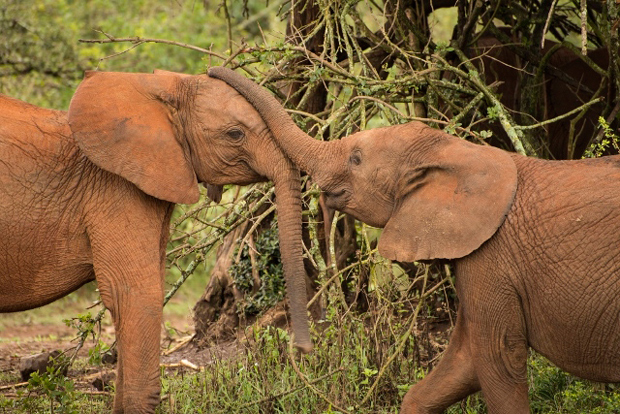
Journey through the elephant orphanage run by the David Sheldrick Wildlife Trust in Kenya, through the experiences of Science North Staff Scientist Bruce Doran. Follow a baby orphaned elephants life at the Sheldrick Orphanage in the acclaimed documentary, "For the Love of Elephants", narrated by David Suzuki.
Doors open at 6.30 p.m Refreshments will be served.
Join renowned conservationist, lawyer and award winning science author Ronald Orenstein as he explores the world of ivory and rhino horn trade. A story of international crime thousands of miles away in countries few of us visit. Compelling, riveting, fascinating!
Q & A and book signing will follow the talk.
Palmerston Library
Palmerston Ave. (2 min walk from Bathurst subway station)
Thursday December 5th 2013 7pm
Tickets: $10.00 (at the door)
Tickets: (416) 285-1744
www.zoocheck.com
On December 7, I will be appearing in Sudbury, Ontario on a programme organized by Sajidha Bagha and Canadian supporters of African Elephants. The time and place:
Science North
100 Ramsey Lake Road
Sudbury, ON Canada
Greater Sudbury, ON P3E 5S9 Canada
Saturday, 7 December 2013 from 7:00 PM to 10:00 PM (EST)
Here is the official blurb:
A fascinating and exciting evening dedicated to African Elephants. Join us for an enthralling presentation by Dr. Ronald Orenstein, one of the world's leading experts on the elephant ivory and rhinoceros horn trade. Dr. Orenstein,an author, zoologist, lawyer and tireless campaigner for wildlife,has been at the vanguard of the worldwide movement to save Africa's largest animals for more than twenty-five years. His talk will look at how the wildlife trade works, the crime syndicates that are involved and what can be done. Don't miss this passionate, illustrated presentation!
Launching of Dr. Orenstein's book"Ivory, Horn and Blood" in Northern Ontario and book signing, will follow the talk.
Journey through the elephant orphanage run by the David Sheldrick Wildlife Trust in Kenya, through the experiences of Science North Staff Scientist Bruce Doran. Follow a baby orphaned elephants life at the Sheldrick Orphanage in the acclaimed documentary, "For the Love of Elephants", narrated by David Suzuki.
Doors open at 6.30 p.m Refreshments will be served.
Sunday, October 20, 2013
Hear Ron's Interview on "Behind the Schemes"
Rhishja Cota-Larson of Annamiticus recently recorded a lengthy interview with me for her series of podcasts on illegal wildlife trade, Behind the Schemes. You can listen to it here, or here on iTunes.
Behind the Schemes is also available for subscription. Rhishja's past interviews feature guests such as Naftali Honig from Project for the Application of Law for Fauna, who has been actively engaged in fighting poachers in Central Africa, Dr. Bibhab Talukdar, Chair of the IUCN Asian Rhino Specialist Group, and South African journalist Julian Rademeyer, author of Killing for Proft: Exposing the Illegal Rhino Horn Trade. These are interviews worth hearing!
Behind the Schemes is also available for subscription. Rhishja's past interviews feature guests such as Naftali Honig from Project for the Application of Law for Fauna, who has been actively engaged in fighting poachers in Central Africa, Dr. Bibhab Talukdar, Chair of the IUCN Asian Rhino Specialist Group, and South African journalist Julian Rademeyer, author of Killing for Proft: Exposing the Illegal Rhino Horn Trade. These are interviews worth hearing!
Sunday, October 13, 2013
Ron's Argument Against Rhino Trade Appears in the Times of Swaziland
On October 10 the Times of Swaziland ran a feature article arguing in favour of South Africa's proposal to legalise trade in rhinoceros horn. My reply, slightly edited for length, has now appeared in the same newspaper. Here it is:
LEGALISING RHINO HORN TRADE WON’T HELP
14/10/2013 04:14:00
By Dr Ronald Orenstein
Mr Reilly’s article “Let’s make rhino farming legal” (October 10), in support of legalised rhino farming, is based on a number of misapprehensions.
He states that a legalised trade in rhino horn would reduce the takings received by illegal traders, by whatever percentage of the market illegal trade was able to capture. This simplistic assumption overlooks the very real possibility that the existence of a legal trade would further stimulate the market and might actually result in greater profits for illegal traders as a result.
One of the major problems in discussing trade in rhinoceros horn is that there are a number of different markets, with consumers seeking it not only as a traditional medicine but (mistakenly) as a cancer cure, as a status symbol, or as an additive to alcoholic drinks; and any marketing scheme that does not cover all of these would leave a substantial buying public that continues to purchase from illegal sources.
The author also repeats the old but mistaken statement that ‘nothing has worked’ to protect rhinoceroses up until now.
As a zoologist and lawyer who has worked in this area for over 25 years, and who has recently published a book on the subject (“Ivory, Horn, and Blood: Behind the Elephant and Rhinoceros Poaching Crisis”, Firefly Books), I can assure Mr Reilly that a combination of strong and effective enforcement on the ground and effective regulation of the market, including demand-reduction programmes, has indeed worked in the past, and worked very well.
During the 1990s, it was believed by many conservationists that rhinoceros conservation was on an upward trend as a result of such efforts in both Africa and Asia.
it is true that the rise in affluence in China and Vietnam has led to a new poaching surge that has cancelled out most of the gains that had been made, to suggest that these methods have never worked, and therefore cannot work again, is inaccurate.
Mr Reilly rightly points out that there is very little time left for us to put conservation methods in place if we are to save rhinoceros populations. Unfortunately, one of the chief problems with resorting to a legal trade regime is that it will unquestionably take a number of years before such a scheme can gain international acceptance.
The next meeting of the Convention on International Trade in Endangered Species (CITES) will not take place for three years, and the chances that the parties to that Convention would agree to a legal trade before then are vanishingly small.
Even if trade were to be approved at that meeting, it would undoubtedly, if ivory is any example, be dependent on certain conditions being met, including approval of buyers, followed by further discussion at meetings of the CITES Standing Committee.
This means that it is highly unlikely that even a broadly-supported legal trade would be able to start before 2017 at the earliest. We cannot afford to put off conservation for that long.
Further, as the article suggests, China may already be taking steps to establish its own farms and, if it is successful in doing so, experience with similar situations suggests that it would not be interested in purchasing horns from southern Africa if it can guarantee its own supply. Therefore, any suggestion that legal trade would generate much in the way of revenue for conservation may be ill-based.
The entire argument for legal trade, in addition, ignores the chief threat to rhinoceros populations in southern Africa – namely, continued poaching in the Kruger National Park. Despite private ownership schemes, that is where most of the animals are and it is where most of them are being killed.
Any solution that does not immediately address problems in the Kruger will fail to address the biggest problems facing rhinoceros conservation today.
Rather than supporting legal sale, it would be far better if all rhinoceros range countries, including South Africa and Swaziland, were to get behind rigorous enforcement combined with support for demand reduction campaigns in the market, and I believe that such campaigns can best be supported if it is made clear once and for all that rhinoceros horns will never appear in legal commercial trade.
LEGALISING RHINO HORN TRADE WON’T HELP
14/10/2013 04:14:00
By Dr Ronald Orenstein
Mr Reilly’s article “Let’s make rhino farming legal” (October 10), in support of legalised rhino farming, is based on a number of misapprehensions.
He states that a legalised trade in rhino horn would reduce the takings received by illegal traders, by whatever percentage of the market illegal trade was able to capture. This simplistic assumption overlooks the very real possibility that the existence of a legal trade would further stimulate the market and might actually result in greater profits for illegal traders as a result.
One of the major problems in discussing trade in rhinoceros horn is that there are a number of different markets, with consumers seeking it not only as a traditional medicine but (mistakenly) as a cancer cure, as a status symbol, or as an additive to alcoholic drinks; and any marketing scheme that does not cover all of these would leave a substantial buying public that continues to purchase from illegal sources.
The author also repeats the old but mistaken statement that ‘nothing has worked’ to protect rhinoceroses up until now.
As a zoologist and lawyer who has worked in this area for over 25 years, and who has recently published a book on the subject (“Ivory, Horn, and Blood: Behind the Elephant and Rhinoceros Poaching Crisis”, Firefly Books), I can assure Mr Reilly that a combination of strong and effective enforcement on the ground and effective regulation of the market, including demand-reduction programmes, has indeed worked in the past, and worked very well.
During the 1990s, it was believed by many conservationists that rhinoceros conservation was on an upward trend as a result of such efforts in both Africa and Asia.
it is true that the rise in affluence in China and Vietnam has led to a new poaching surge that has cancelled out most of the gains that had been made, to suggest that these methods have never worked, and therefore cannot work again, is inaccurate.
Mr Reilly rightly points out that there is very little time left for us to put conservation methods in place if we are to save rhinoceros populations. Unfortunately, one of the chief problems with resorting to a legal trade regime is that it will unquestionably take a number of years before such a scheme can gain international acceptance.
The next meeting of the Convention on International Trade in Endangered Species (CITES) will not take place for three years, and the chances that the parties to that Convention would agree to a legal trade before then are vanishingly small.
Even if trade were to be approved at that meeting, it would undoubtedly, if ivory is any example, be dependent on certain conditions being met, including approval of buyers, followed by further discussion at meetings of the CITES Standing Committee.
This means that it is highly unlikely that even a broadly-supported legal trade would be able to start before 2017 at the earliest. We cannot afford to put off conservation for that long.
Further, as the article suggests, China may already be taking steps to establish its own farms and, if it is successful in doing so, experience with similar situations suggests that it would not be interested in purchasing horns from southern Africa if it can guarantee its own supply. Therefore, any suggestion that legal trade would generate much in the way of revenue for conservation may be ill-based.
The entire argument for legal trade, in addition, ignores the chief threat to rhinoceros populations in southern Africa – namely, continued poaching in the Kruger National Park. Despite private ownership schemes, that is where most of the animals are and it is where most of them are being killed.
Any solution that does not immediately address problems in the Kruger will fail to address the biggest problems facing rhinoceros conservation today.
Rather than supporting legal sale, it would be far better if all rhinoceros range countries, including South Africa and Swaziland, were to get behind rigorous enforcement combined with support for demand reduction campaigns in the market, and I believe that such campaigns can best be supported if it is made clear once and for all that rhinoceros horns will never appear in legal commercial trade.
Saturday, October 12, 2013
"Ivory, Horn and Blood" released in North America
My new book has been officially released in North America!
Ivory, Horn & Blood: Behind the Elephant and Rhinoceros Poaching Crisis, my eighth book, is probably the one closest to my heart. I have worked on this issue for over twenty-five years, and I was one of the behind-the-scenes crafters of the deal that led to the original ivory ban in 1989. It is heartwrenching, after years of success, to see us mired once again in a poaching crisis. In this book, I have tried to explain how we got onto this mess, and to suggest some ways to get us out of it.
We don't have much time.
If you want to buy my book (and I hope you do!), you can order a hard copy from one of the sources listed here. If you own a Kindle, this link will allow you to buy an e-book copy from the Amazon distributor in your region.
Here is the official press release from Firefly Books:
Meticulous research, chilling facts.... an important and much needed book.
-- Dr. Jane Goodall, DBE, Founder, The Jane Goodall Institute
If it is understanding you seek, turn these pages.
-- Virginia McKenna, OBE, Founder, The Born Free Foundation
If you care about elephants and rhinos, and the poaching onslaught that threatens their extinction in the wild, this is the book for you.
-- Ian Redmond, OBE, Ambassador, UN Great Apes Survival Program
Ivory, Horn & Blood: Behind the Elephant and Rhinoceros Poaching Crisis, my eighth book, is probably the one closest to my heart. I have worked on this issue for over twenty-five years, and I was one of the behind-the-scenes crafters of the deal that led to the original ivory ban in 1989. It is heartwrenching, after years of success, to see us mired once again in a poaching crisis. In this book, I have tried to explain how we got onto this mess, and to suggest some ways to get us out of it.
We don't have much time.
If you want to buy my book (and I hope you do!), you can order a hard copy from one of the sources listed here. If you own a Kindle, this link will allow you to buy an e-book copy from the Amazon distributor in your region.
Here is the official press release from Firefly Books:
Meticulous research, chilling facts.... an important and much needed book.
-- Dr. Jane Goodall, DBE, Founder, The Jane Goodall Institute
If it is understanding you seek, turn these pages.
-- Virginia McKenna, OBE, Founder, The Born Free Foundation
If you care about elephants and rhinos, and the poaching onslaught that threatens their extinction in the wild, this is the book for you.
-- Ian Redmond, OBE, Ambassador, UN Great Apes Survival Program


Firefly Books Releases Ivory, Horn & Blood
Behind the Elephant and Rhinoceros Poaching Crisis
TORONTO, ON, Oct 09, 2013 (Menafn - Marketwired via COMTEX) --In 1989, after a decade of slaughter that saw one-half of all African elephants killed by poachers, the international community issued a worldwide ban on ivory trading. In 1997, just as elephant recoveries were gaining momentum, the ban was relaxed. Then in 2008, China won the right to import ivory legally from four designated countries insouthern Africa. China soon became the world's leading destinationfor smuggled ivory. At the same time, an upsurge of interest in rhino horn from a newly affluent Vietnam threatened the last of the world's rhinos.
"Today we face a new and even more urgent crisis. The global ivory trade is back with a vengeance," says Ronald Orenstein, a veteran of the fight to stop poaching and to save the world's elephants and rhinoceroses. It is headline news. Ruthless militias from the Lord's Resistance Army to Al-Shabaab buy their weapons with the proceeds of "blood ivory". Organized crime syndicates control the movement of ivory and rhino horn from Africa to Asia. World leaders including Ban Ki-Moon and Barack Obama have condemned the trade as a threat not just to wildlife, but to global security.
In Ivory, Horn & Blood (October 2013, 29.95 hardcover) Ronald Orenstein exposes the poaching crisis for what it is: a brutal slaughter of animals and people that will end only when there are no more elephants and rhinoceroses, or when the world makes serious efforts to rein in an-out-of-control demand for ivory and horn.
Elephants are in "free-fall", as well-documented statistics reveal:
--Ten years ago, 4 out of every 10 African elephants that died were killed by poachers. Today, that figure is 8 out of every 10.
--Sixty percent of Africa's Forest Elephants, amounting to tens of thousands of animals, have been slaughtered in the last decade.
Rhinoceroses are also being slaughtered throughout their ranges, in the mistaken belief, among others, that the horns cure cancer. In South Africa, home to 80% of the world's surviving rhinos, rhino poaching has soared to feed demand by the newly affluent markets in Vietnam and elsewhere. Driven by this growing market in the Far East,horn prices now rival those for cocaine.
In South Africa, "proxy hunters" with legal permits have acted as fronts for poaching syndicates. Kruger National Park has been invaded by poachers from neighboring Mozambique. South Africa's poaching toll has soared from no more than 36 per year between 1990 to 2007 to a"horrifying" 668 in 2012. Over 500 more were killed in the first halfof 2013.
The situation is dire:
--The Vietnamese one-horned rhinoceros is extinct
--The Western black rhino is now believed to be extinct
--The Western black rhino is now believed to be extinct
--The Northern white rhinoceros, the largest of them all, only survives -- just barely -- in captivity.
Internal wars in Africa and increasing worldwide demand fuel the poaching crisis. Lawlessness, political instability, lack of resources, easy access to weapons and dire poverty all play a part. Poachers have moved from hunting with snares and spears to automatic weapons, and sophisticated "quiet killing" techniques using immobilizing drugs, poison, crossbows and silencers. Roving gangs move about with impunity. Anti-poaching squads, though prepared and sometimes permitted to shoot to kill, are at constant risk. Victories are rare and increasingly massive ivory shipment seizures probably represent only a fraction of what is getting through. Tonnes of contraband ivory have been found in shipping containers, as cleverly hidden as any illegal drug.
It is "a full-scale war," says Orenstein. "For the worst possible reasons, elephants and rhinoceroses are front-page news today. They have become poster children for the worst excesses of organised wildlife crime."
In Ivory, Horn & Blood, Orenstein traces the past 40 years of the compelling history of the trade bans, as much a series ofinternational political debates as a battle to save living creatures,and explains why new calls for legal trade in both ivory and horn maymake matters worse.
He explains how the trade in elephant tusks and rhinoceros horns,though happening thousands of miles away in countries that few will visit, has far-reaching implications not only for the animals but also for us.
"We are fighting, too, for people," Orenstein warns, "Over the past ten years more than 700 rangers have been killed by poachers in Africa and Asia... As long as organized criminal gangs, and vicious, power-hungry militias are able to feed off the profits of the trade in elephant ivory and rhinoceros horn, people, as well as animals, will suffer and die, caught in the cross-fire of an undeclared war."
The future is not without hope. Range countries continue to bolster their antipoaching efforts. Buyer attitudes may be changing, albeit slowly. Celebrities, who may have more impact than any government edict, have taken up the cause, including acclaimed Chinese basketball player Yao Ming.
The stakes could not be higher. "The title of this book is Ivory,Horn & Blood," Orenstein reminds readers. "Let us never forget, as we think of the magnificent animals that are the victims of this evil trade, that much of that blood is human."
About the author:
Ronald Orenstein is a zoologist, lawyer and wildlife conservation who has written extensively on a wide range of natural history issues. His most recent book is Turtles, Tortoises and Terrapins: A NaturalHistory (Firefly Books, 2012). He is a member of the board of the Species Survival Network (SSN) and the Elephant Research Foundation.
With a Foreword by Dr. Iain Douglas-Hamilton, one of the world's foremost authorities on the African elephant. He pioneered the first in-depth scientific study of elephant social behavior, in Tanzania,at age 23. He founded Save the Elephants in 1993, and was awarded the illustrious Order of the British Empire (OBE).
Title: Ivory, Horn & Blood: Behind the Elephant and Rhinoceros Poaching Crisis
Author: Ronald Orenstein
Foreword: Iain Douglas-Hamilton
Pub date: October 2013
Format: plastic-laminated hardcover
Price: 29.95 / 216 pages / 6 x 9 / 32 pages in color / sources /index
978-1-77085-227-3
Available at bookstores, online booksellers or www.fireflybooks.com
Firefly Books Ltd., established in 1977, is a North American publisher of non-fiction and distributor of non-fiction and children's books. Firefly's goal is to bring readers beautifully produced books written by experts at reasonable prices.
CONTACT
Valerie Hatton
416 499-8412
Valerie Hatton
416 499-8412
Monday, August 20, 2012
A Little Something for my Fellow Fanatics
This is going to be a blog, mostly, about my published and soon-to-be-published books, in the hope that it will persuade you to rush out to your nearest bookstore (or sign in to an appropriately commercial website) and buy as many copies as possible. My books are all, so far, about natural history and the conservation of wildlife. It may be odd, then, that I am starting off with a link to something completely different: a one-act play that I have been tinkering with, just for the fun of it, off and on for the past several months.
The play is certainly not one written with an eye to commercial success (though I wouldn't object to that, of course). It is, instead, a little gift to my fellow Savoyards - those of us who have spent much of our spare time, over (in my case) a good many decades, listening to, performing in, reading about, and generally wallowing in the quintessentially Victorian operettas of W.S. Gilbert and Arthur Sullivan. In particular, it is for my fellow members of SavoyNet, co-conspirators on an internet listserv and, once a year, members of a first-rate performing society at the International Gilbert and Sullivan Festival in Buxton, England.
 One of the problems with being a devotee of G&S (as we like to call it) is that you can forget that not everyone may be on as familiar terms with The Canon as you are. Therefore, just in case, I am going to issue a warning: unless you are a member of the Inner Brotherhood (and if you have to ask what that means, you're not), you may find my little jeu d'esprit puzzling at best. Of course, if you would like to become a devotee, you should first visit the Gilbert and Sullivan Archive. Once you have mastered its contents, my play will become clear as day. You might even laugh at the jokes.
The play is called "The Learned Judgment; or, Gone Abroad". If you would like to read it (and I hope you do), you can view it here:
The Learned Judgment; or, Gone Abroad
The play is certainly not one written with an eye to commercial success (though I wouldn't object to that, of course). It is, instead, a little gift to my fellow Savoyards - those of us who have spent much of our spare time, over (in my case) a good many decades, listening to, performing in, reading about, and generally wallowing in the quintessentially Victorian operettas of W.S. Gilbert and Arthur Sullivan. In particular, it is for my fellow members of SavoyNet, co-conspirators on an internet listserv and, once a year, members of a first-rate performing society at the International Gilbert and Sullivan Festival in Buxton, England.

The play is called "The Learned Judgment; or, Gone Abroad". If you would like to read it (and I hope you do), you can view it here:
The Learned Judgment; or, Gone Abroad
Subscribe to:
Posts (Atom)